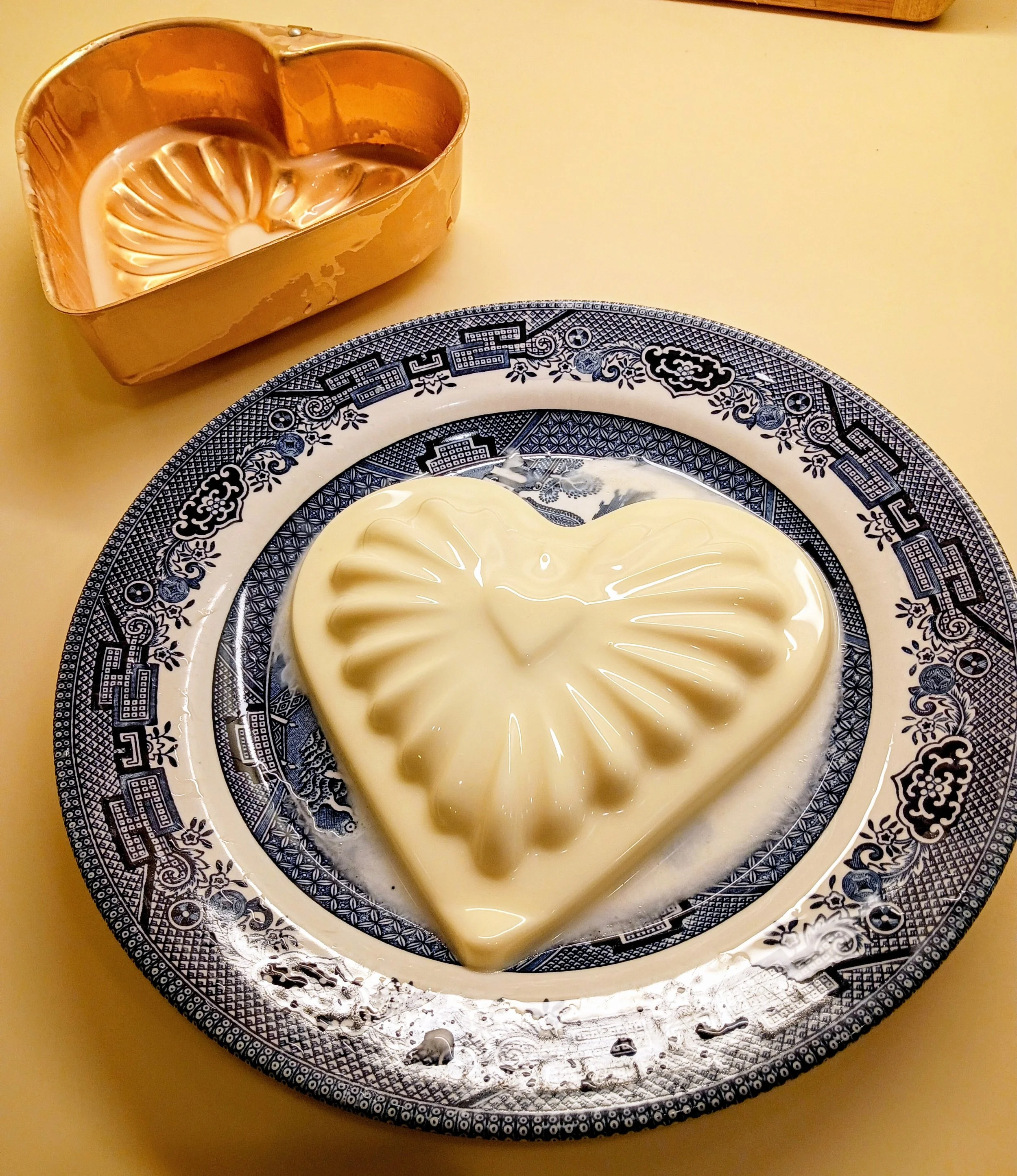
Blancmange
In Treacherous Shoal, Aunt Barbara requires a few drops of Squire’s Elixir after overindulging in Elsie’s blancmange in 18th century Charles Town.
This is the blancmange referenced in Monty Python, when blancmanges from outer space were turning everyone in England into Scotsmen so that they could win at Wimbledon. Blancmange was a popular dish in the Middle Ages, the concept probably coming home with the crusaders. The original recipe involved almonds, chicken, dried fruit, in a dish often recommended for convalescents.
It evolved into this cream jelly – nothing but cream, gelatin, sugar, and flavoring. How did people in the 18th century make gelatin? They boiled up calves feet, or maybe fish bladders, to extract the collagen. The fish bladder extract was called isinglass. It could be bought from an apothecary, which was much preferrable to boiling up fish bladders at home.
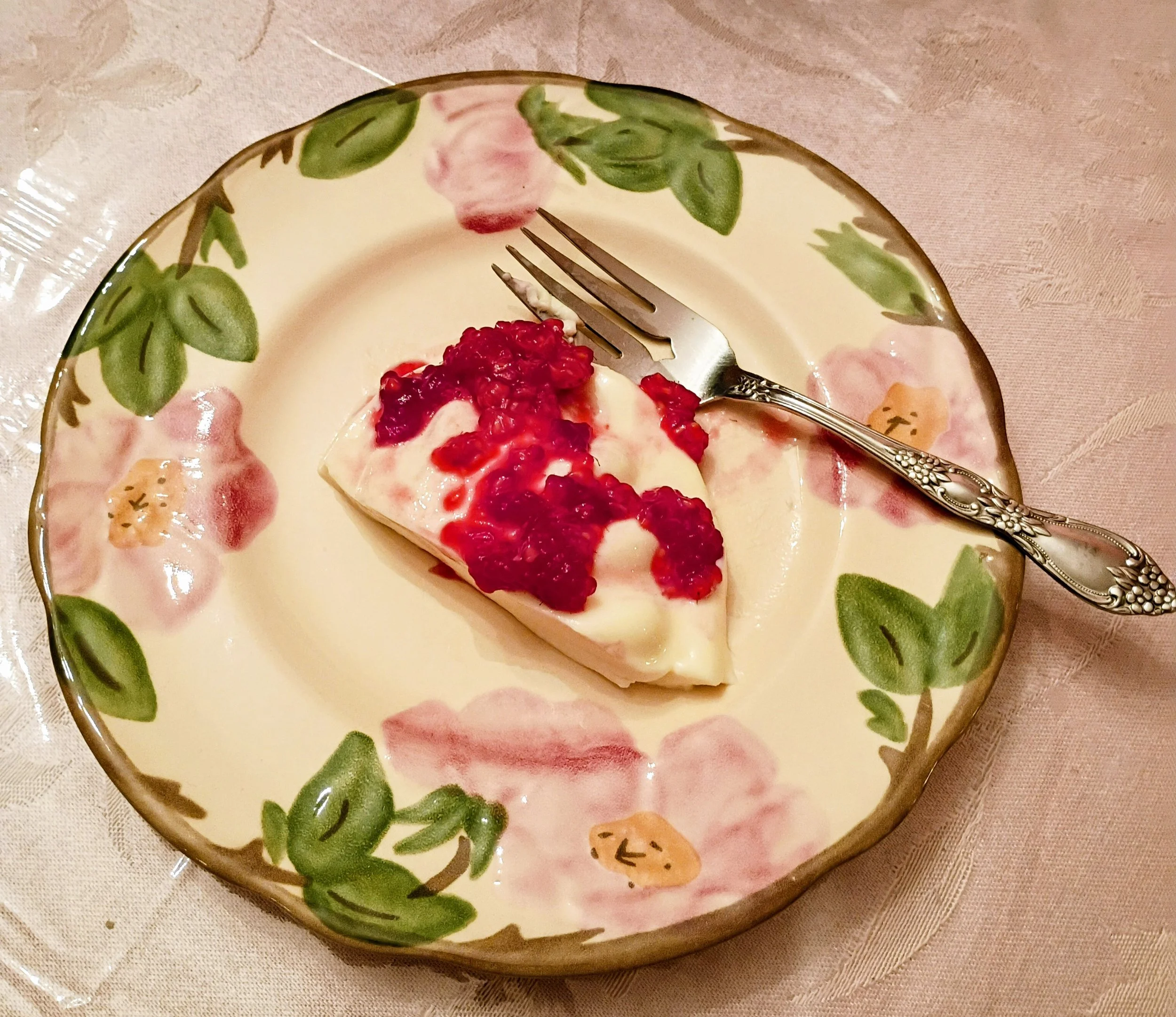
In The Art of Cookery Plain and Easy, Hannah Glasse called this flummery (actually a different dish) and recommended serving with sugared pears. After unmolding, I poured some crushed raspberries over it instead. My daughter found the flower waters too strong and said that the dish tasted like soap. Harriet Pinckney Horry recommended adding ground almonds instead of the flower waters. You might want to substitute almond, vanilla or other extracts.
This is an exceedingly easy dish to make, and delightfully smooth.
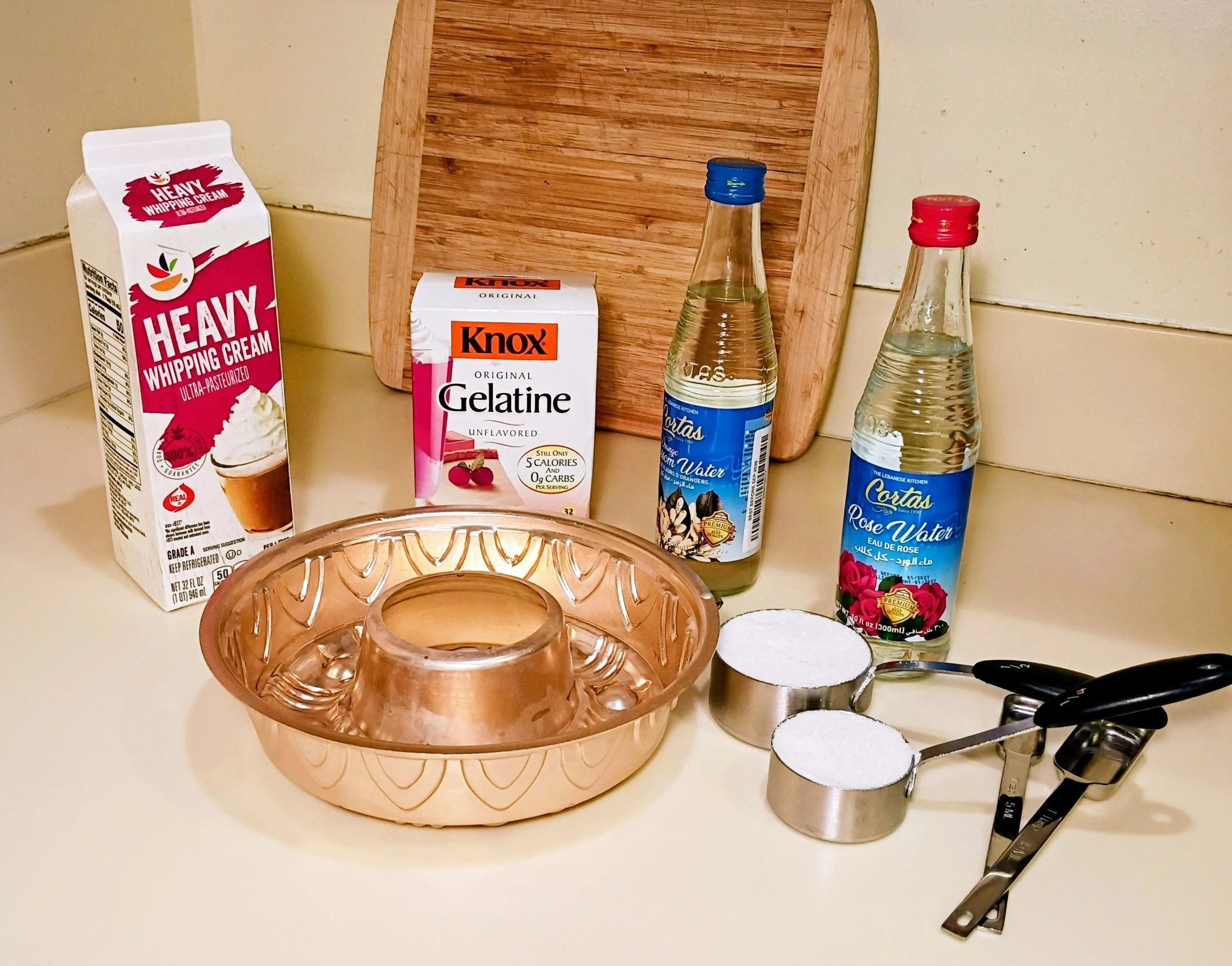
4 cups heavy cream
2 tablespoons unflavored gelatin
¾ cup sugar
1 tablespoon rose water
2 teaspoons orange-flower water
Ingredients
Warm the cream in a small saucepan over medium heat.
Mix the gelatin with ½ cup of the cream, and let soften for 5 minutes. Then add it to the remaining cream and bring it to a simmer, stirring constantly. Do not let it boil.
Remove from heat and stir in the sugar. Keep stirring until it is dissolved. Let it cool, stirring occasionally to prevent a skin from forming. When it is lukewarm, stir in the rose water and orange-flower water.
Rinse a 4-6 cup mold in cold water. Pour in the mixture and refrigerate, covered, overnight, until it is firmly set.
When ready to serve, fill a pan with boiling water and dip the mold into it quickly. Put a plate over the top and turn over. The custard should slip onto the plate. If not, try a second dip into the hot water.
Keep refrigerated.
Directions