
Slave Clothing
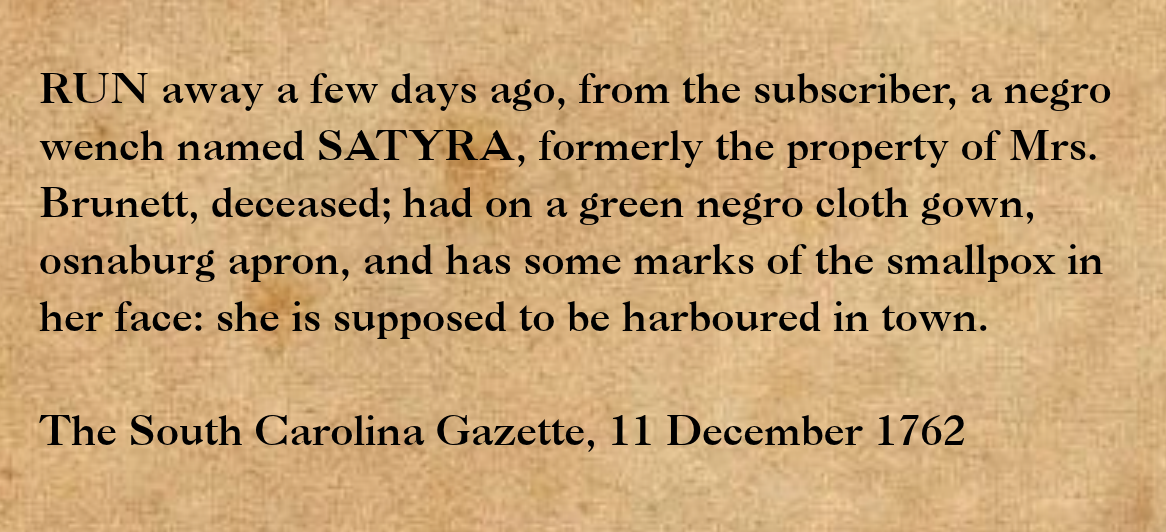
It's possible to get a good picture of what slaves were wearing in the 1760s from The South Carolina Gazette. Notices of runaway and found slaves contain detailed description of their apparel. For example, the runaway Jacob was wearing a white negro cloth coat, jacket, breeches, with blue buttons and buttonholes, and an old laced hat. A woman, Satyra, was in a green negro cloth gown and an osnaburg apron.
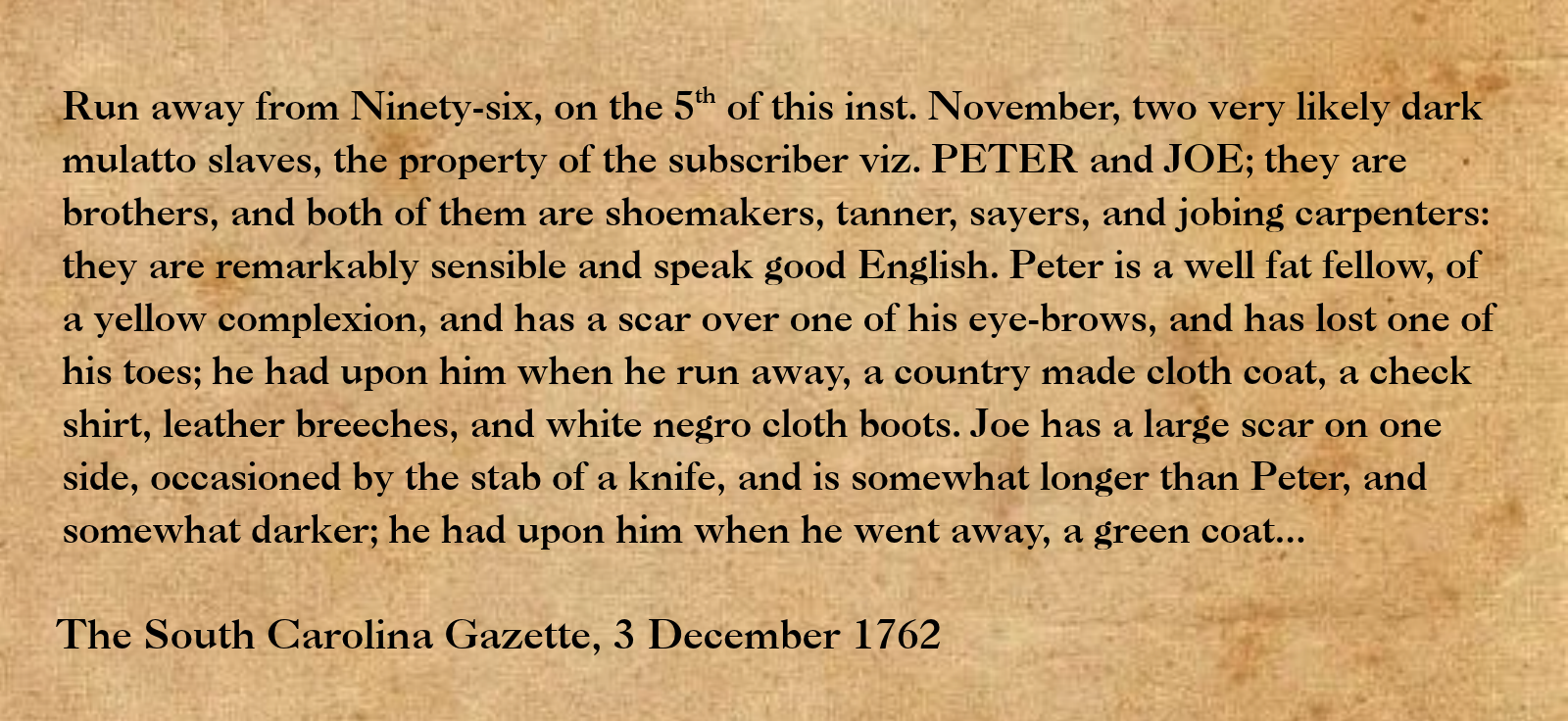
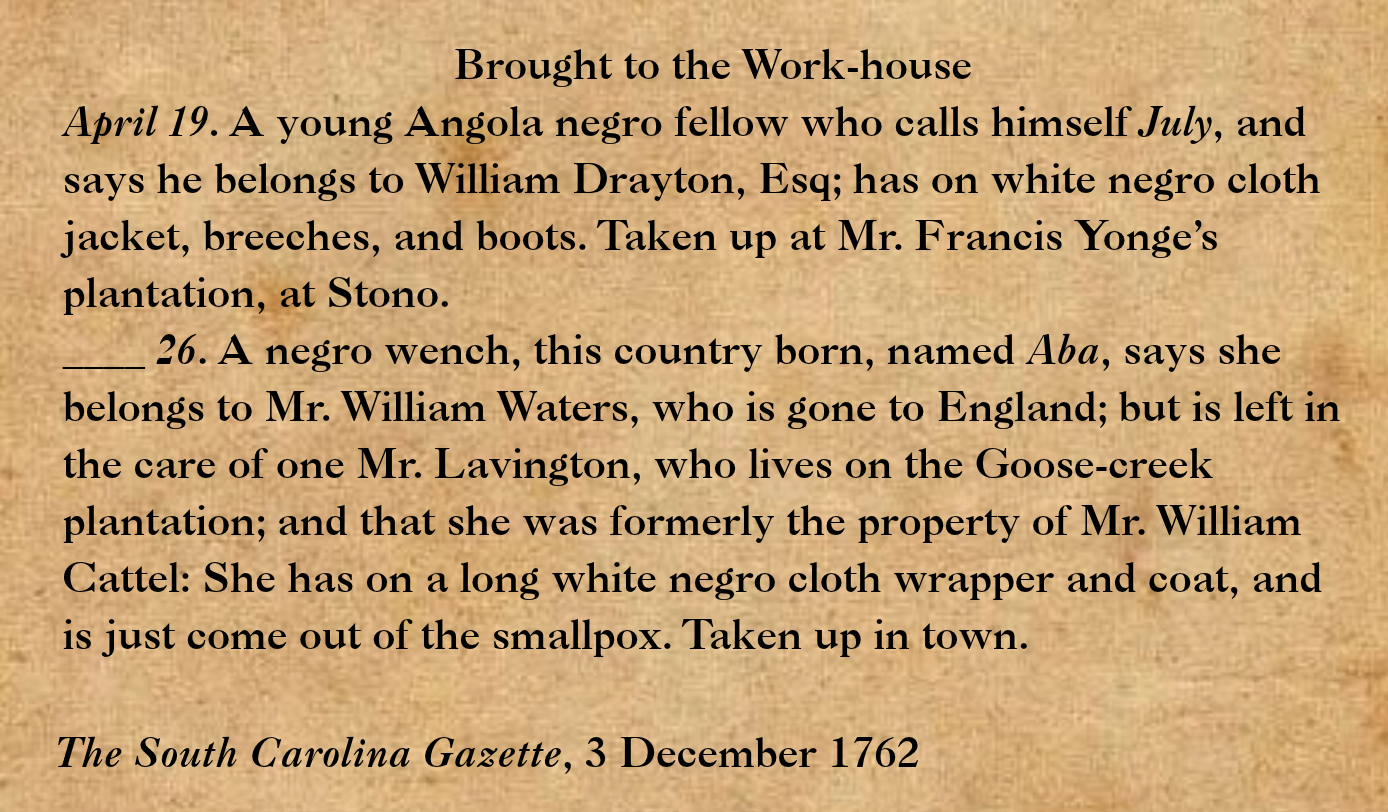
Like these two runaways, slaves were generally clothed in osnaburg and "negro cloth." Osnaburg was a coarse linen plain weave fabric with good wear. It derived its name from the town of Osnabrück in Germany. You can still buy it today, although it is now made from cotton. Negro cloth was another coarse fabric made from low quality fiber of either wool, cotton, or a blend of the two. Advertisements for it in the Gazette indicate that it came in blue, green, white, or drab. There were also "negro shoes" that could be purchased in bulk.
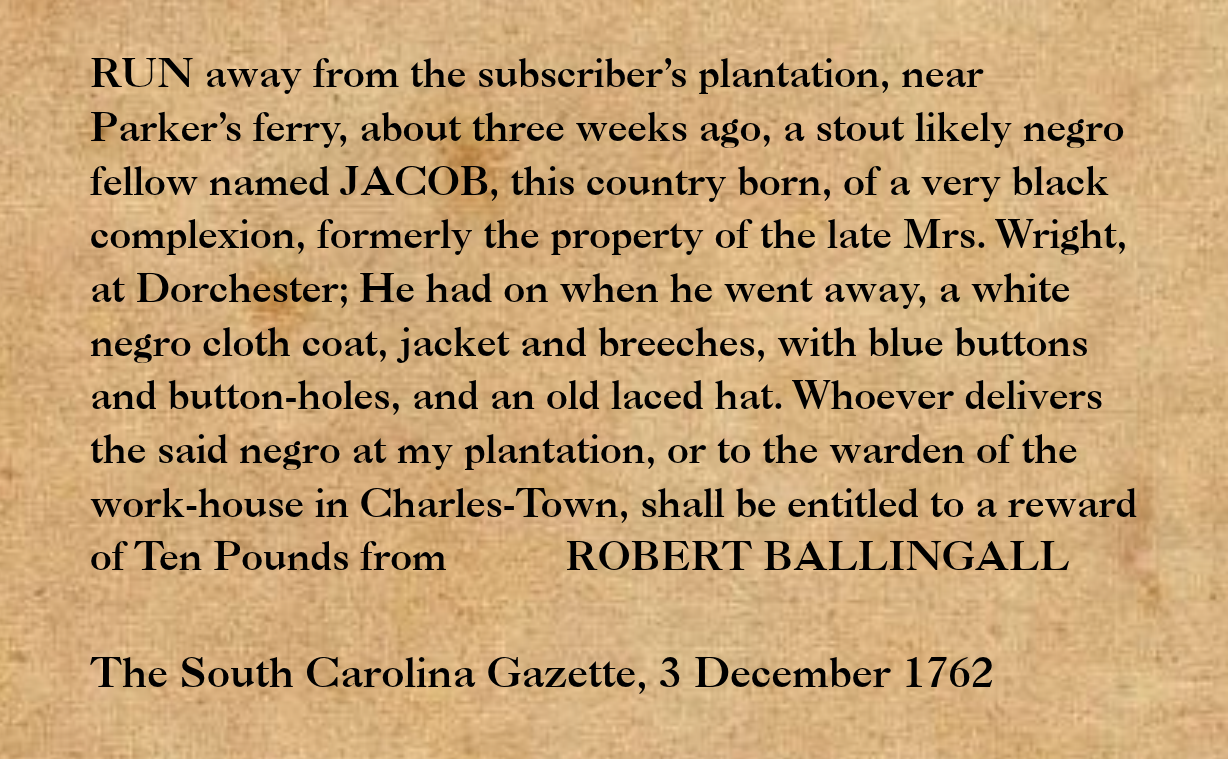
You may have noticed that Jacob wore an "old laced hat," Masters might also give servants their cast offs. South Carolina sumptuary laws, however, limited what slaves might be seen in. Permitted fabrics included duffels, kerseys, calicoes, and garlix, all utiliarian fabrics that could, however, come in checks and plaids
Slaves might also buy clothing with their own earnings from selling produce or providing services in their free time, typically on Sunday. This was more likely to be seen in towns, where opportunities for private earnings and purchases were greater. Visitors to Jamaica described slaves appear on the streets of the town dressed in their finery, purchased with the proceeds from the sale of their produce. While authorities did their best to limit slaves clothing options, more than a few bondsmen found ways within those limits to appear at their best.
This painting provides a rare glimpse of slave clothing from the 18th century. These individuals are likely wearing their best dress, given the holiday air to the painting. Note the mix of European styles—the men in breeches and coats, some of the women wearing kerchieves—and the African-styles head scarves.
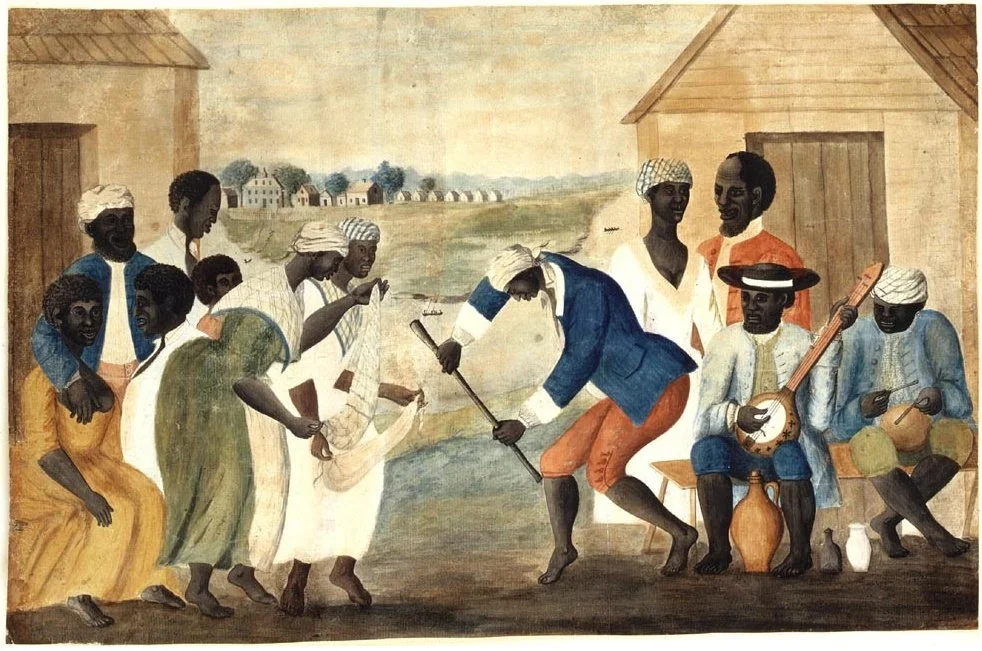
Slave dance to banjo, 1780s, anonymous. Public domain image from the South Carolina Encyclopedia, University of South Carolina, Institute for Southern Studies