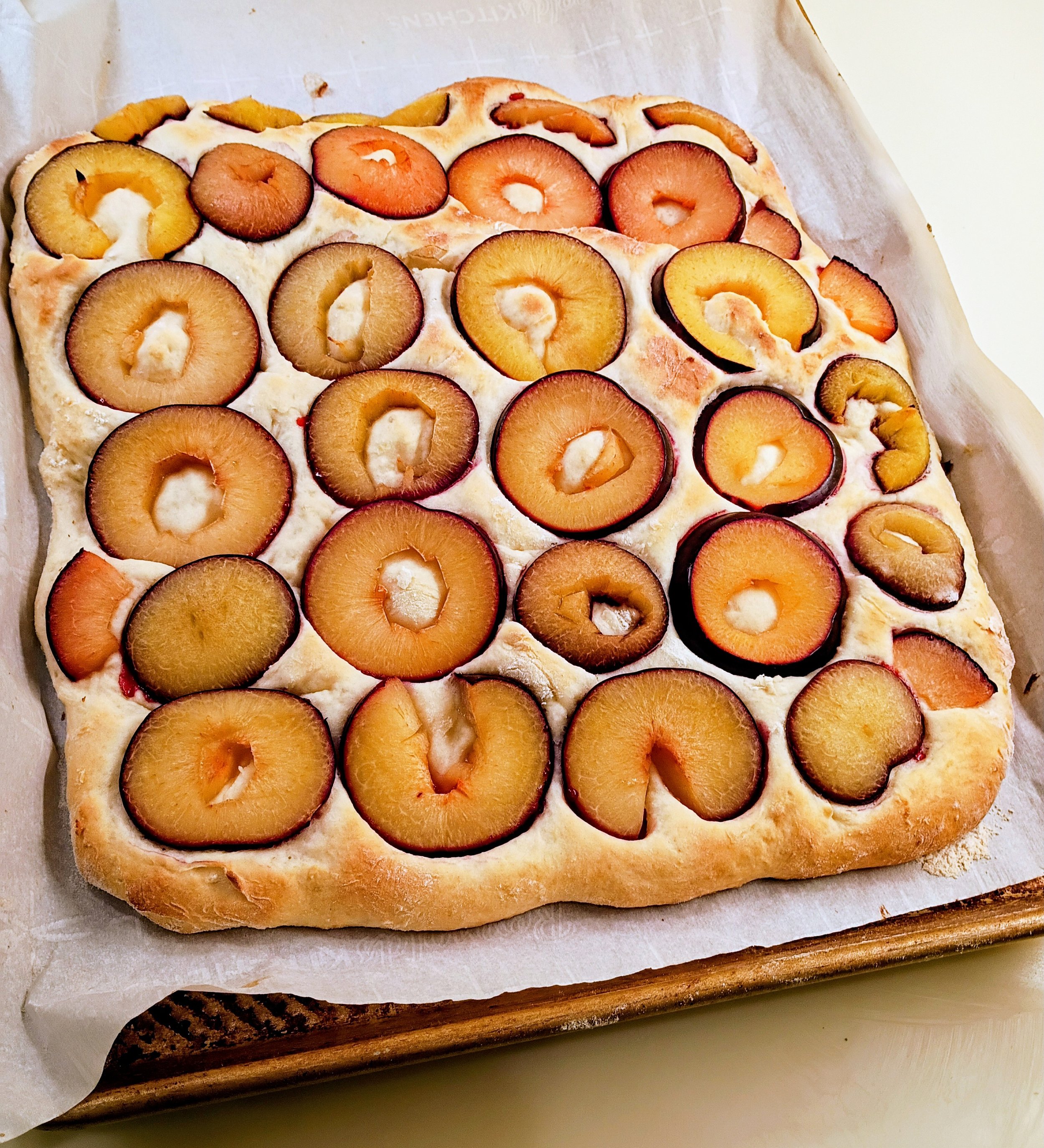
Quetschekuche: Rhineland Plum Cake
In Treacherous Shoal, Pastor Martin of the Lutheran Church, newly arrived from the Rhineland, offers José some of his wife’s plum cake.
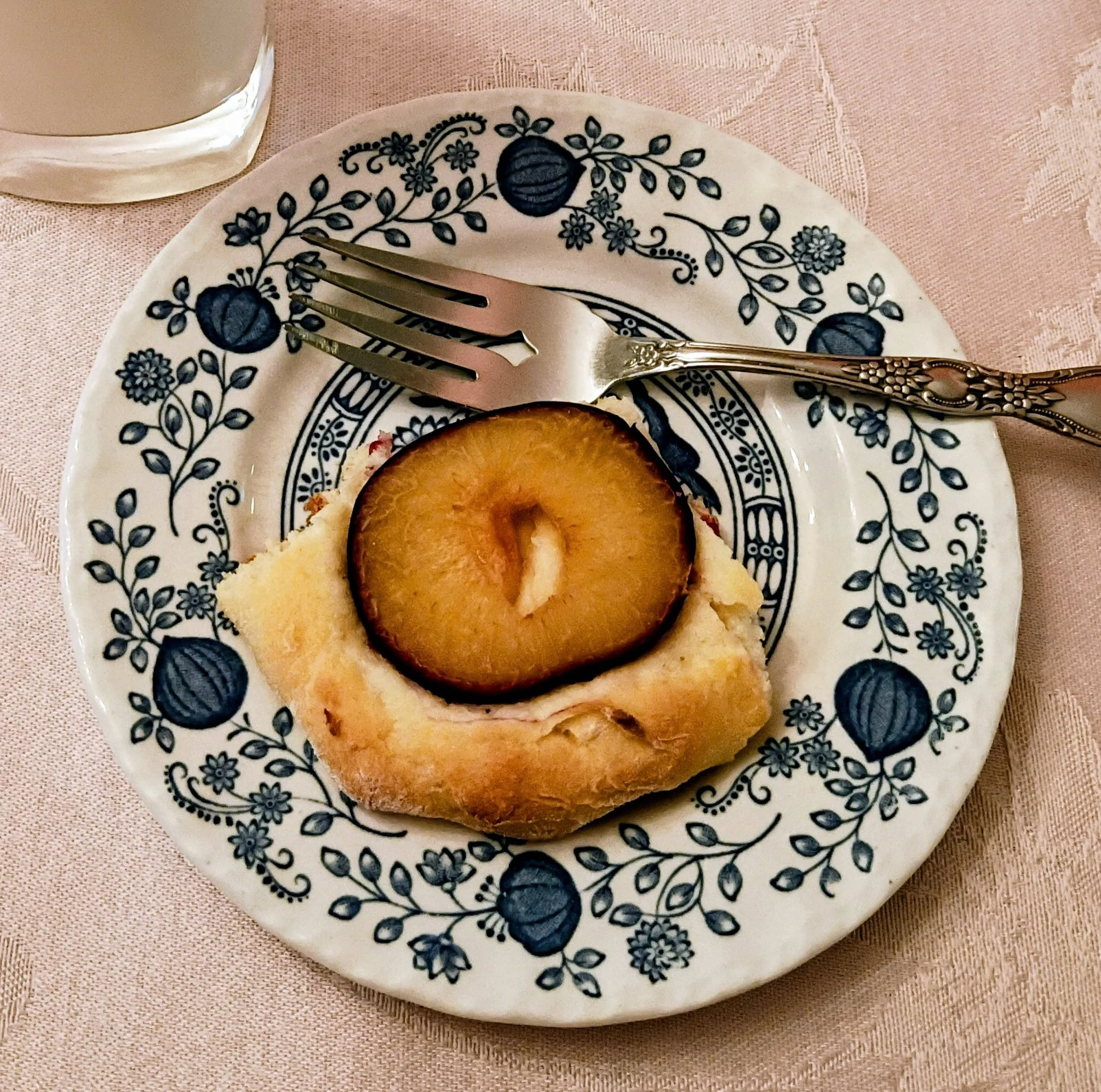
My German friend Julia from church tells me that plum cake is a popular treat in Germany in the fall, when the plums ripen. It is made with small Italian plums, the sort used to make prunes, halved and layered one over the other like shingles. Since these plums were not available here, I used the standard eating plum, sliced. Julia said the cake looked different but was equally delicious.
Many recipes on-line add streusel. It is not necessary and would not have been used in the 18th century, when sugar would have been quite expensive in the German principalities.
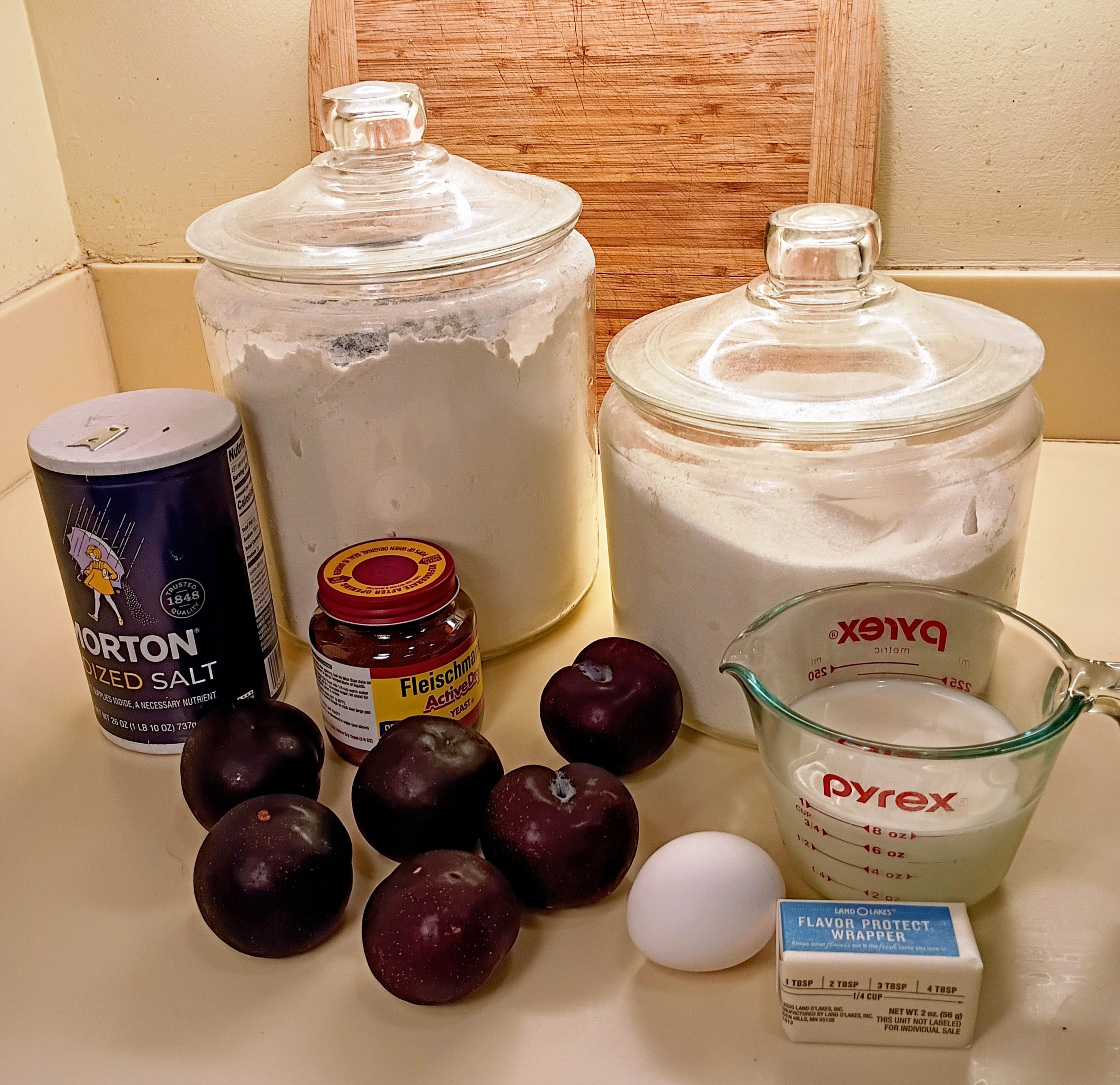
1 cup lukewarm milk (around 110° F)
1 egg, room temperature
¼ cup sweet butter, softened (1/2 stick)
2 cups flour
¼ teaspoon salt
1/3 cup sugar
1 packet active dry yeast
A dozen small Italian plums. (If unavailable, use 6 larger ones)
Ingredients
Stir the sugar into the warm milk, then add the yeast. Let it set for several minutes. I like to turn the oven on low and set the milk on the range to stay warm. You can soften the butter this way, too. In the summer, I put them on the screened-in porch.
In a large bowl, whisk together the flour and salt. Add the butter and the egg and beat together until the butter is in crumbs. Add the yeast mixture, which should now be bubbly.
Beat together. The dough will be rather sticky. Cover the bowl with a clean towel and put it in a warm spot, like the range, to rise for an hour. It should double in size.
Meanwhile, pit and slice up your plums. If they are juicy, you will need to dry them with paper towels and let them drain. Line your baking sheet with parchment paper.
When the dough has risen, preheat the oven to 440°F. Pour the dough out on a floured counter and, with well-floured hands, knead for a couple of minutes. Using a rolling pin, roll it out so that it is large enough to cover the baking sheet from end to end. Stretch it with your fingers to make it fit. Ideally, the dough should be rolled out to no more than ¼ inch thickness to get the right ratio of plum to bread. Then place the plums on the dough, end to end, covering the dough as much as possible.
Bake for 15 minutes.
Directions