
Shrewsbury Cakes
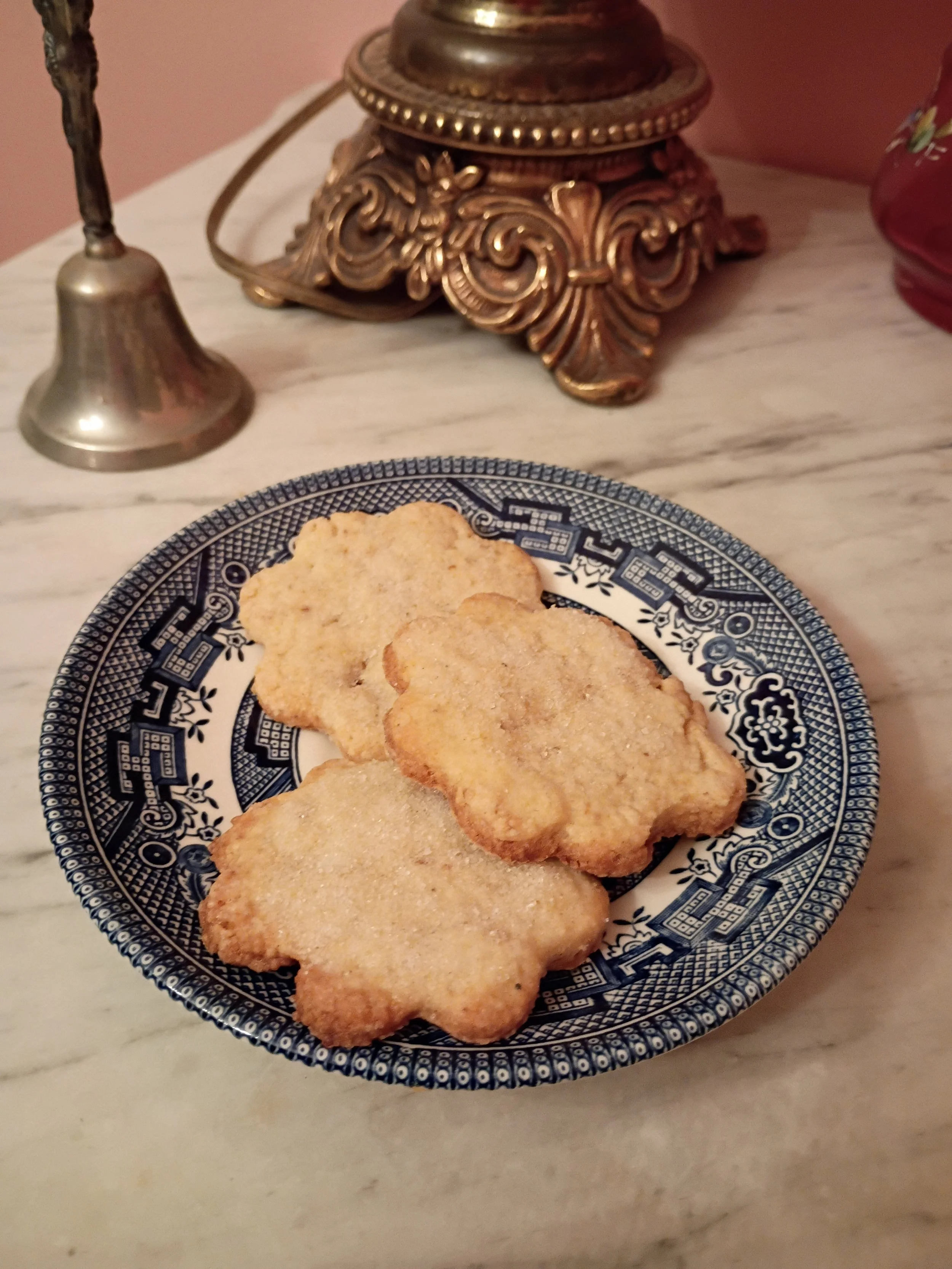
In Treacherous Shoal, Miss Jane serves Shrewbury cakes with tea when Uncle Charles and Samuel come to discuss business.
The English brought the recipe for these crispy cookies to the colonies. These would not have standard fare for ordinary households, as this quantity of sugar would have been expensive. Rose water was a common ingredient in sweets at this time period, and could be distilled domestically rather than imported. Mace, used sparingly in this recipe, would have been imported from the East Indies.
This recipe is basedon one in Dining with the Washingtons, which in turn was based on a recipe in Hannah Glasse’s 1747 English cookbook, The Art of Cookery Made Plain and Easy. I’ve modified it based on a recipe from Harriott Pinckney Horry.
Harriott advised using “a good deal of mace, and a little nutmeg.” I added ½ teaspoon, but I’ve seen advice to add as little as ¼ teaspoon, or as much as 1 full teaspoon. Assorted recipes call for various combinations of mace, nutmeg, and cinnamon. Feel free to experiment and find your ideal Shrewbury cake, just as cooks in the 18th century would have made free with their ingredients. You can also substitute brandy for the rose, water, but you will lose that distinctive 18th century flavor.
The key to a thin, crispy Shrewsbury cake is making sure it is no more than ¼ of an inch thick when it goes into the oven. I tried rolling out the cakes, but they proved a little tough. Another recipe suggested chilling a roll of the dough and cutting off slices, but this resulted in oddly shaped little ovals. Harriott offered the bad advice of spooning the dough out and letting it spread in the oven. In the end I used the snickerdoodle technique: I took a substantial pinch of dough, rolled it on my palm until it was the size of a walnut, then squished it until it was thin. If you use this technique, wash your hands periodically to keep the dough from sticking.
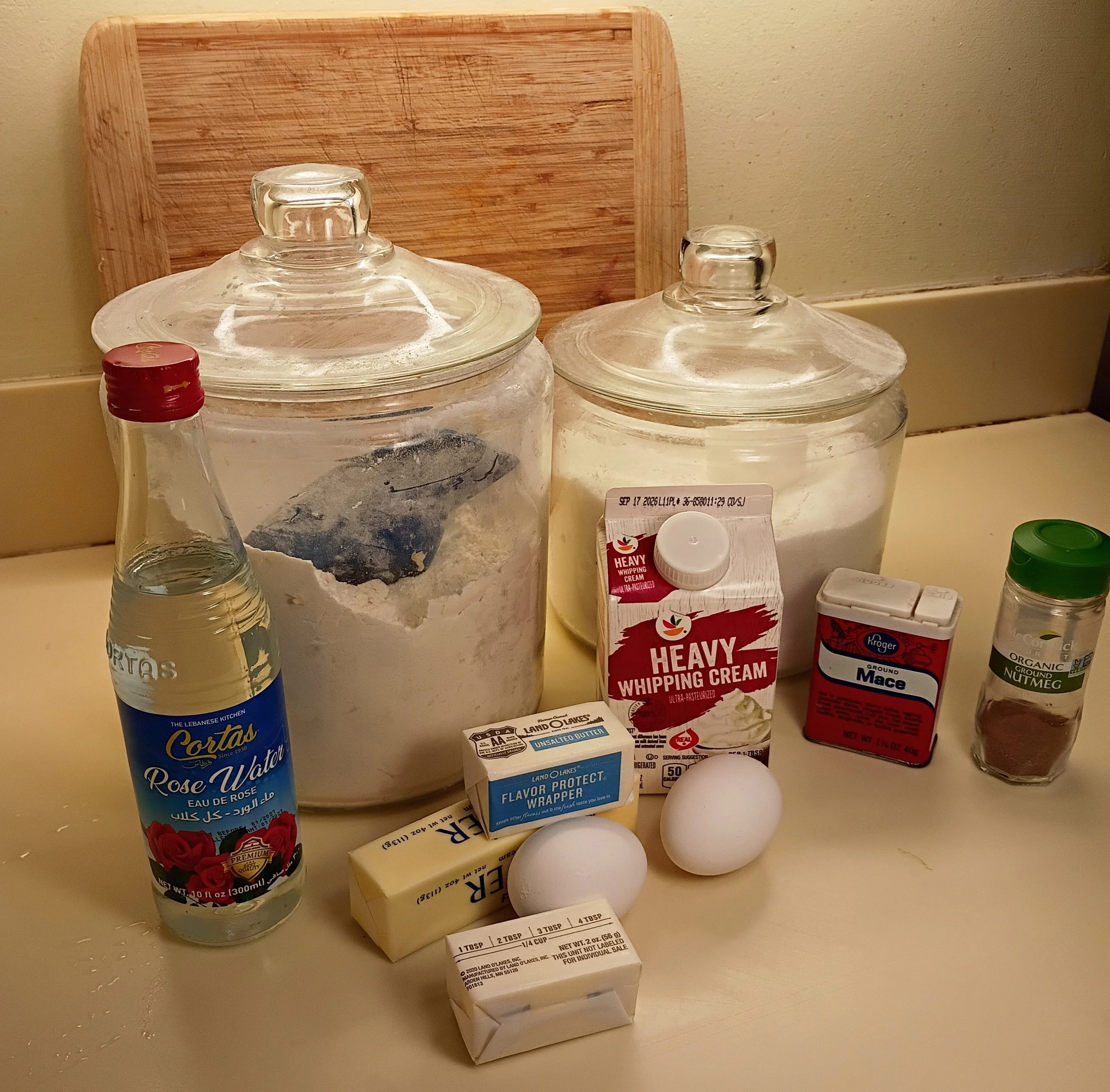
1 cup (2 sticks) of butter
3 ½ cups of flour
1 cup sugar
½ teaspoon mace
2 eggs
1 tablespoon rose water
2 tablespoons heavy cream
More sugar for sprinkling
Ingredients
Soften butter.
Using a mixer or mixing spoon, cream the butter in a large bowl until it is fluffy
Mix the flour, sugar, and mace in a smaller bowl. I like to use a whisk.
Gradually beat the flour mixture into the butter until thoroughly combined. Use a rubber spatula to get all the crumbs into the mixture.
Beat the eggs, then beat in the rose water and cream.
Gradually beat the egg mixture into the dough, again using the spatula to make sure the dough is thoroughly mixed.
Chill the dough for at least 1 hour.
Grease cookie sheets and preheat the oven to 375°.
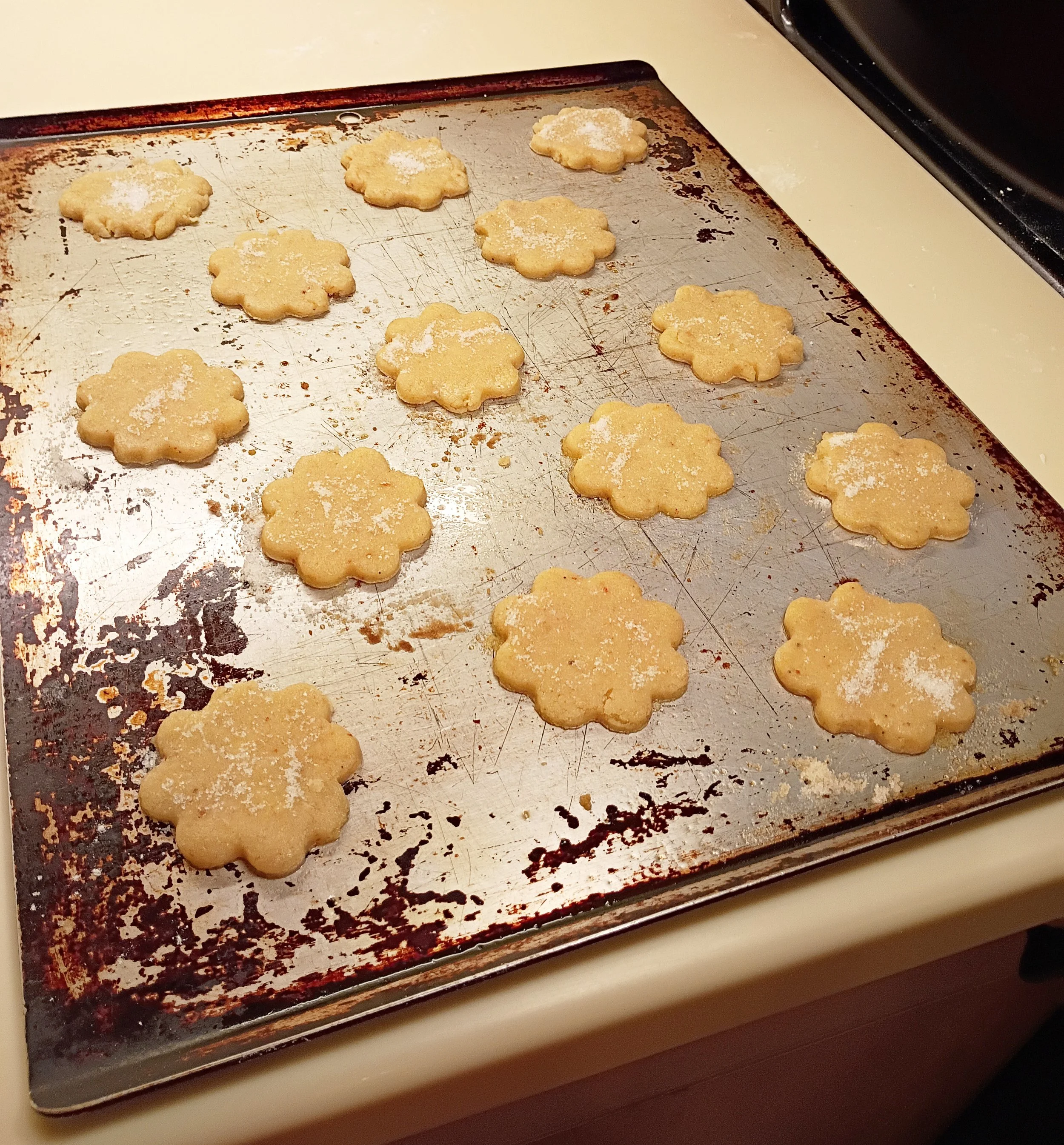
Take the dough out of the refrigerator. Pinch off a generous amount of dough and roll on your palm with into a walnut-sized ball. Flatten with your palm or the bottom of a glass into into ¼ inch thick rounds. Place on the cookie sheet about ½ inch apart and sprinkle with sugar.
Bake for 8-10 minutes, or until they are crispy and slightly brown on the edges. Transfer them to a wire rack to cool.
Directions